





Grease piles up faster than most kitchen owners expect. A single week of fryer and grill use can leave a noticeable film on the hood, and that’s before you even think about what’s collecting inside the ductwork or on the fan blades overhead. Skip cleaning long enough, and you end up dealing with three problems at once – a fire risk, air that doesn’t move right, and equipment straining harder than it should. Restaurant fan cleaning, along with the hood and duct system feeding into it, is one of those maintenance jobs that’s easy to put off until it’s no longer optional.
Why Restaurant Fan Cleaning Should Never Be Overlooked
The exhaust fan is doing more work than people give it credit for. It’s pulling heat, smoke, and grease-heavy air out of the kitchen constantly during service, and once grease starts coating the blades and housing, that pull weakens. A kitchen running on a weak exhaust fan gets hot, smoky, and harder to work in pretty quickly.
A few red flags tend to show up before things get bad. Grease collecting on surfaces near the fan is one. So is a smell that sticks around no matter how many times the floors are mopped. Ventilation that feels noticeably weaker, or a fan suddenly making noise it never used to – both are worth taking seriously. Catching these early is what restaurant grease buildup removal is really about, before the buildup turns into something bigger.
The Essential Restaurant Grease Buildup Removal Checklist
Check the hood interior and filters. Filters catch grease all day long, so they need consistent attention or they stop filtering the way they’re supposed to. The hood surface underneath matters just as much – it’s the closest point to the flame, and grease there builds up fast.
Inspect ductwork for hidden grease. This gets skipped constantly, mostly because nobody sees it. Grease works its way further into the ducts than most owners assume, and once it’s visible from the outside, it’s usually been sitting there a while. Regular inspections are the only way to catch it early.
Examine exhaust fans and fan blades. Coated blades can’t move air efficiently, and that strain adds up over months of use. Check for leaks around the housing, vibrations that weren’t there before, and grease sitting directly on the blades – any of these means the fan needs attention.
What Is Included in Professional Hood, Duct, and Exhaust Fan Cleaning?
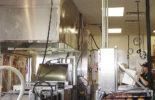
A real service goes past what a kitchen crew can handle on a slow afternoon. Technicians clean the hood canopy and filters, degrease the interior duct system, and clean and inspect the exhaust fan itself. They also get into spots that get overlooked during regular shifts – corners, gaps, areas grease settles into, but nobody thinks to check.
That’s the actual scope of hood, duct, and exhaust fan cleaning, and it covers the entire path that grease-laden air travels, not just the parts a customer might glance at. Done right, it also keeps the kitchen where it needs to be for health and fire inspections.
Who Provides Commercial Grease Cleaning Services?
General cleaning staff aren’t trained for this, and that’s the honest answer. This work calls for technicians who understand commercial kitchen exhaust systems specifically.
So, who provides commercial grease cleaning services worth hiring? Look for real experience in commercial kitchens, the right degreasers and equipment for the job, a maintenance schedule instead of one-time visits, and a working knowledge of local compliance rules. Kitchens that stick with a provider like this tend to avoid the downtime and fire risk that come from letting grease pile up between services.
Create a Regular Cleaning Schedule for a Safer Kitchen
Frequency really depends on how much a kitchen cooks. A fryer-heavy operation running all day needs a tighter schedule than one that cooks moderately. Routine inspections matter here too – they catch buildup while it’s still manageable instead of after it’s already a problem. Kitchens that stay ahead of this schedule tend to run safer and get more life out of their equipment.
Conclusion
Grease never accumulates uniformly or just in one part of the system. So, if you are going for a restaurant fan cleaning, you also have to include hood and duct systems for complete cleaning and proper safety. Kitchens that make cleaning of these three a priority and do it in a consistent way ends up having a safe work environment for employees as well as a safer dining experience for customers.
FAQ’s
How often do restaurant exhaust fans need cleaning?
Most kitchens need it every few months, but heavy fryer or grill use can push that to monthly.
Does hood cleaning cover the exhaust fan too?
Not always. So, to be sure of it, please check it beforehand. Since fans often need a separate cleaning pass from the hood and ducts.